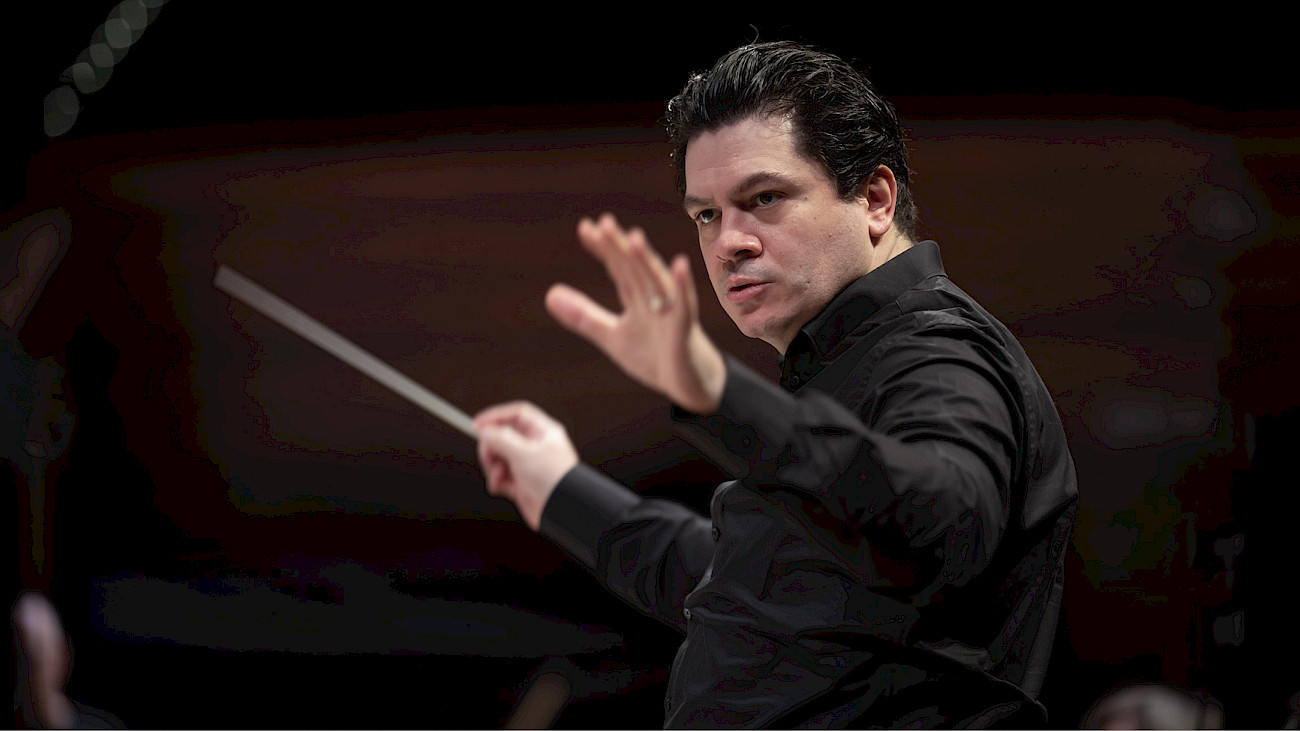
"Cristi, the tempo has to be right, then everything else works too": that's what David Zinman used to say to his student Cristian Măcelaru during his summer courses in Aspen. That, and practically nothing else: "He never actually spoke," says Măcelaru last May after a rehearsal at the Tonhalle Zurich, "but I learnt an enormous amount from him - from his precision in conducting, from his respect for the scores, from the simple sophistication of his gestures". He attended Zinman's summer courses for two years, in 2008 and 2009, "I was already in my late twenties then, I was late as a conductor, but it was just the right thing to do". Many other things in his career have also gone "exactly right": sometimes according to plan. And at decisive moments, purely by chance.
The first plan came from Cristian Măcelaru's father, who would have liked to become a musician himself. But his Romanian military service, which lasted two and a half years, intervened, and then the family began to grow: in the end there were ten children, so studying was no longer an option. So he remained a passionate amateur musician, and it was clear that his children should play an instrument. Cristian, who was born in 1980 and is the youngest of them all, is not the only one who has made music his profession: "I recently conducted in Barcelona, where one of my sisters was in the orchestra." And who knows, maybe the Măcelaru ensemble will give a performance one day: "With all our children, we would now have around 45 people on stage!"
He learnt the violin himself, and he was talented. So talented that as a teenager he was advised to apply for a summer course at the American Interlochen. This is where the first big coincidence happened: he picked up the wrong application form - not the one for the summer course, but the one for a place at university, which he actually received, including a full scholarship. So, at the age of 17, he boarded an aeroplane for the first time without a return ticket: the misunderstanding had turned into the beginning of a new life.
Cristian Măcelaru studied violin in Interlochen, became concertmaster in Miami at the age of 19, later joined the Houston orchestra - and dreamed of conducting, "because it is the most beautiful thing, and because I have experienced so many uninspired conductors". The worst thing he found was when someone took liberties with the score; when the volume markings in Bruckner were "corrected", for example, it was "a little sacrilege for him, because I knew that something meaningful was being destroyed". For him, an interpretation is perfect when everyone on stage understands what is written in the score and why - and can realise this in such a way that it also makes sense to the audience.
Reading scores with Boulez
The second coincidence should be mentioned here, namely the Chicago Symphony Orchestra concert in 2012, where Cristian Măcelaru stood in for Pierre Boulez. That was his breakthrough, according to many articles about him, but he waves it away: he had already conducted major American orchestras before, "the decisive factor was something completely different: that I came into contact with Boulez". At the time, Boulez was unable to conduct due to an eye operation, but he sat in on every rehearsal, discussed the works with Măcelaru, "and soon we were talking about other scores as well". The contact continued long after the concert in Chicago was over, "and thanks to Boulez, I completely changed the way I read scores".
Măcelaru explains that he used to start by analysing the structure of a work. For Boulez, however, this structure was what you only recognise once everything else has become clear: "With a book, you don't first look at how many chapters it has, you start with the first sentence. That's exactly how Boulez read scores, over and over again - until the big picture became clear." As a result, Măcelaru also "turned his working method on its head".
He would also like to change the way orchestras work. He dreams of having not just the individual parts on the music stands, but the entire scores, "the technical possibilities would be there by now. And it is so important that everyone understands the context in which they are playing!" Who has to listen or react to whom in a particular passage? How loud can a fortissimo be so as not to drown out the others? Where does the music come from, where is it going? He wants to convey this context in rehearsals, "I spend 99 per cent of my time on this".
Involve instead of judge
He does it successfully, as one of the most sought-after conductors of his generation. He was Chief Conductor of the WDR Symphony Orchestra until July 2025 and his contract as Music Director of the Orchestre National de France runs until 2027. And now he is taking over the Cincinnati Symphony Orchestra - as Paavo Järvi's successor. When asked about his plans, he mentions "a small thing that will make a big difference": Anyone who joins the orchestra in Cincinnati after passing their audition does not have a "trial period", i.e. a year of rehearsals ahead of them, but an "integration period" according to their contract. This changes the perspective from judgement to integration, from critical to positive, "which changes the atmosphere in the whole ensemble".
It is quite possible that such details are important to him because, as a violinist, he has experienced what it feels like to start in a new orchestra. These experiences are the basis for everything he does; a conductor who doesn't play an instrument professionally has no place on the podium, he says: "You have to know what it's like to be conducted." This also characterises the concert preparation in Zurich: on the day of the interview, Măcelaru finished the rehearsal for Bartók's "The Woodcarved Prince" over an hour earlier than planned. Not because everything was already perfect, "but because it's a complex work: you reach a point where you have to absorb and process what you've heard and practise the parts again on your own." The fact that his tactic worked was shown by the review in the NZZ after the concert, which described it as a "gripping listening adventure".
Guest and host
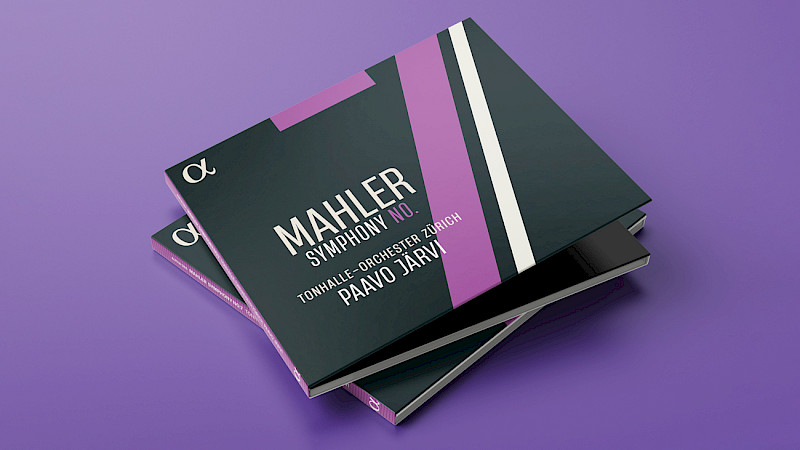
Incidentally, Măcelaru's own first listening adventure with the Tonhalle-Orchester Zürich took place in Aspen. David Zinman brought the as yet unreleased recording of Mahler's Symphony No. 6 to the summer course, "after which I listened to everything the orchestra had recorded".
In the new season, he now has two things to do with the Zurich orchestra: on the one hand, he has once again invited them to the George Enescu International Festival in Bucharest, where he is Artistic Director. On the other hand, he will be conducting at the Tonhalle Zurich for the third time. The programme includes the clarinet concerto "Weathered" by English composer Anna Clyne and Prokofiev's Symphony No. 5 - a typical combination for a conductor who has never wanted to specialise: "I love discovering new ideas and concepts in contemporary works, and I also love the classical repertoire. That's why I selfishly do everything I want to do."
He also does it altruistically: for example at Interlochen, where he looks after the World Youth Symphony Orchestra "to give something back". Or at the Cabrillo Festival of Contemporary Music in Santa Cruz, where he also gives masterclasses as Artistic Director. And ultimately at every single concert: "I never get enough of music. And I want to do everything I can to let others experience this power too."