The architect on the cello
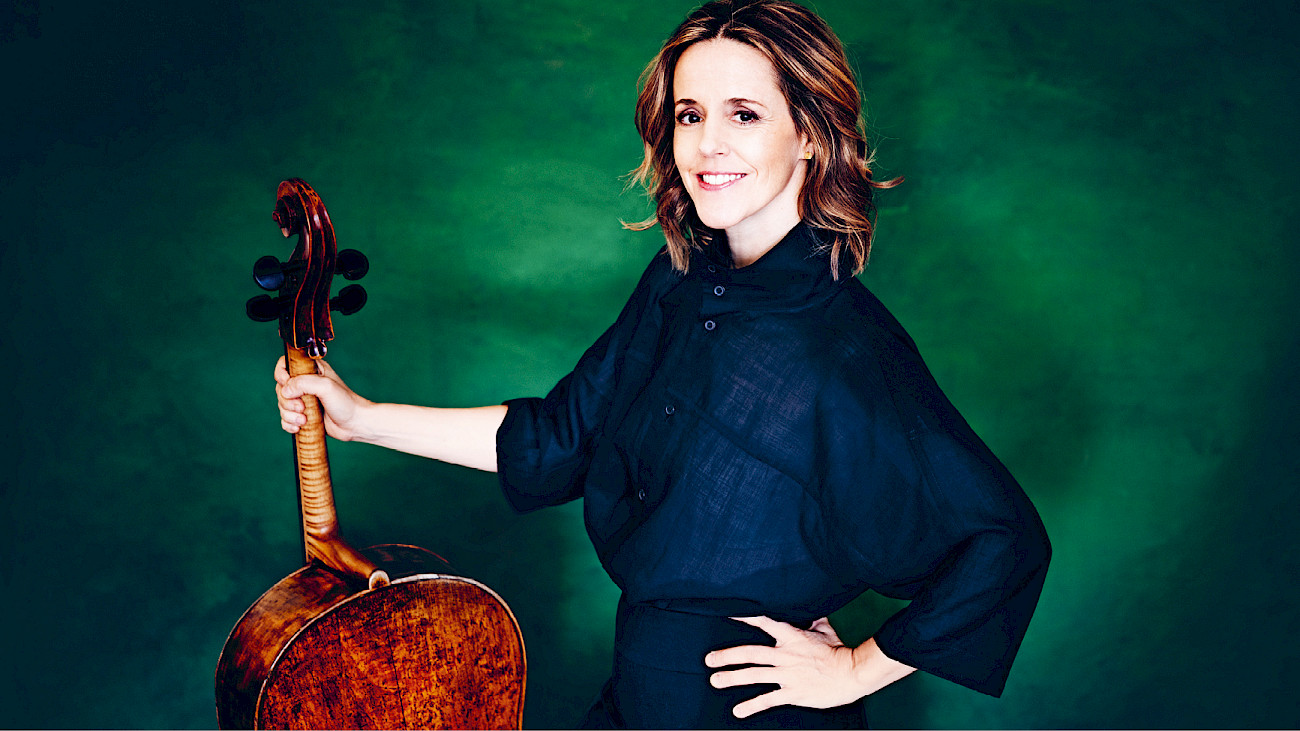
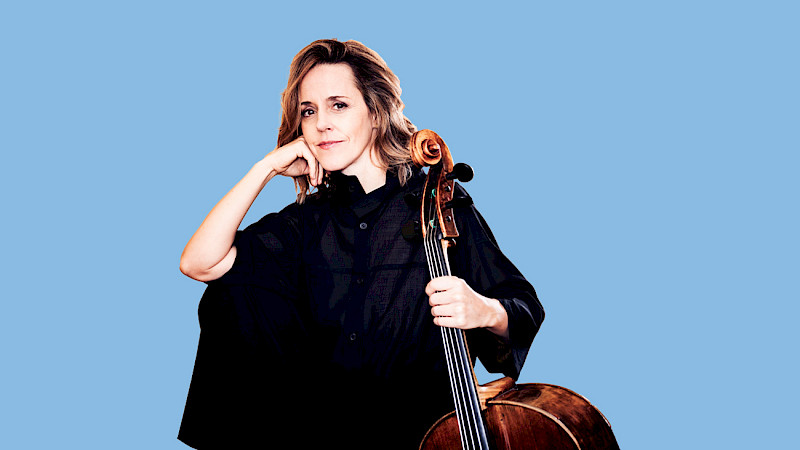
Sol Gabetta consistently champions works that draw her and others out of their comfort zone. She also has such cello concerts with her when she comes to Zurich as a focus artist - 20 years after her debut in our Série jeunes.
It was 20 January 2006, her first recital at the Tonhalle Zurich. A place that already meant a lot to Sol Gabetta at the time, as she had studied in Switzerland, founded her own chamber music festival here in 2005 and attracted the attention of many internationally after her debut at the Lucerne Festival with the Vienna Philharmonic in 2004. "When you get the chance as a young person to play in these big concert halls and really choose the programme for a recital yourself for the first time - those are moments you never forget," she says when we meet. It was a programme that already showed a lot of character, with works by Schumann, Shostakovich, Rachmaninov and Ginastera. Challenging and captivating music by the musically unconventional from different eras, including a melodious greeting from her distant homeland of Argentina.
The puppet choir
Even though she has been firmly rooted in Switzerland for so long, Argentina remains the place where the foundation was laid - in a specialised music kindergarten. "I always wanted to do something new: First I sang in the children's choir, when I was still very small, 3 or 4 years old. Then I started playing the violin. Then I wanted to play the piano, then the harp. At the age of 7, I won my first competition with the cello, and I also bought a clarinet from the prize money." Sol Gabetta still bubbles over with enthusiasm when she remembers this. But she particularly enjoyed playing with her little ceramic dolls: "That was my choir. We rehearsed. Every day. Every morning." This game was above all fun for her as a child. But she already felt that she wanted to make a difference, that she would rather create something herself than be determined by someone or by external circumstances. "This wish has been fulfilled, because as a soloist in concert or in a cello recital, I can create something - from 0 to 100, what, when, where. I can stretch and shorten time, depending on what and how I play. That's fascinating. Then I feel like a musical architect. And I really like that."
Like sisters
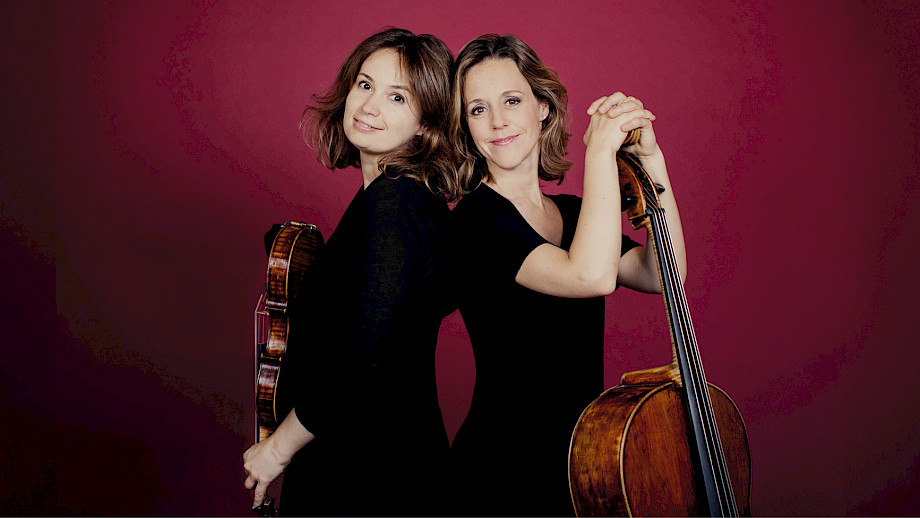
This urge for freedom to create her own music connects her with violinist Patricia Kopatchinskaja in a very special way. They met by chance in Zurich when Sol Gabetta was looking for a violinist to expand her duo with cello and piano into a trio for a concert. This led to countless performances in pretty much every imaginable constellation and situation: "Lots and lots of chamber music through to enormous orchestral formations. At Christmas and New Year, without light, with lots of light or with candles." There is no setting that they have not experienced together. And that is precisely why, says Sol Gabetta, Patricia Kopatchinskaja is not just a musical partner for her: "She's like a sister, she's family."
Nothing is alien to either of them, nothing is too crazy. Even if, as a child, Sol Gabetta was still more concerned with wanting to "do everything well": Over the years, her rebellious side became increasingly free, which she now enjoys living out with Patricia Kopatchinskaja. She is known for crossing boundaries barefoot - and audiences and Sol Gabetta love her for it in equal measure: "Making programmes with her is very, very funny. Because she stands for free thinking, through and through. And that fascinates me again and again."
When an idea becomes a nightmare
Particularly with regard to the duo repertoire, the violinist repeatedly suggested playing unknown or new works by contemporary composers. These considerations gave rise to the idea of calling for a duo to be written for the two of them. "Patricia said we might get five or six or even ten pieces. Then we'll split up, look through them and then decide what we want."
That was the plan. But there were 120 submissions: "It was actually impossible to sift through it all because we only had three days. It was a nightmare! (laughs) We worked with the instruments for 15 hours straight. We read, studied, sang, spoke ... " The compositions were extremely diverse, both in terms of quality and daring - and ranged from established composers to very young ones: "It was fascinating to see that Patricia's talents inspire people to really write in new formats, to have new visions. Because she has no limits. And that, of course, is the best thing that can happen to composers."
Masterpiece and risk of disaster
With the same heartfelt, sincere enthusiasm with which she talks about her duo partner, she raves about every single work that she has very consciously chosen for her season as a focus artist in Zurich. Shostakovich, who had already found his place at her debut, takes up quite a bit of space. She has never played his 2nd Cello Concerto with the Tonhalle-Orchester Zürich, but she did at a concert that was decisive for her career: in 2004, at her Lucerne debut with the Vienna Philharmonic. "It wasn't easy, but I think I've always made life a little more complicated for myself, especially when it comes to music. I need that to grow as a person, as a musician."
When in doubt, Sol Gabetta always decides against the easy path and in favour of the challenge. Her fundamental understanding of her art is even based on this: "I feel much more fulfilled after playing such pieces. Only then do I feel that it makes sense to add another interpretation of this cello concerto." She knows from her own experience just how rewarding it can be to tackle Shostakovich's 2nd Cello Concerto in different phases of life: "In this work, which begins so morbidly, the lines are difficult to find right from the start. You don't know where it will lead. When you play the concerto when you're very, very young, you don't really know what to do with it. You play it. But you're still very far away from what the concerto can offer us."
13 cellists
In September 2023, the cello section of the Tonhalle-Orchester Zürich started out as an independent ensemble together with the then focus artist Kian Soltani. This season, it will once again perform two concerts: a chamber music matinee with works by Mozart and Wagner on 14 December 2025 - and a programme with Sol Gabetta on 8 June 2026, which is still being worked out.
Sol Gabetta has already experienced several times how far from the ideal a performance of this work can be. The concerto develops its idea over a long distance - and once she had an orchestra behind her, but was suddenly alone in the field: "I lost 70 per cent of the orchestra during the concert. They simply stopped playing because the conductor was probably lost too."
Ideal constellation in Zurich
For her, of course, this is no reason to blame the work, but to work on the circumstances next time. For example, she takes notes with her when the conductor assures her in the dress rehearsal that it will be fine in the concert. Or even more radically and simply: the piece will only be on the programme if the stars are aligned. "I've known Paavo Järvi and the Tonhalle-Orchester Zürich for so many years. And the last time I played with them, I was really impressed. I thought, where and when will I find such an ideal combination again? Then let's do this Shostakovich now."
But what does "ideal" mean for a cellist like Sol Gabetta, who has worked with so many top orchestras and their chief conductors in recent decades? "I love working with orchestras and their chief conductors. Because you're usually lucky enough to have just two partners on stage rather than three." For this calculation, the principal conductor and orchestra form one unit, the soloist the second. When these two come together perfectly in concert, spontaneously and simultaneously sensing "in which direction things need to move", then the ideal is within reach.
Allergy prevention
Not abandoning ideals, or at least leaving no stone unturned, seems to be deeply rooted in Sol Gabetta's character. She was encouraged in these values by her teachers Ivan Monighetti and David Geringas. However, she is particularly grateful that they also gently put the brakes on at the right moments. Take Schumann, for example: she only tackled his cello concerto relatively late on the advice of her teacher.
"That was important so as not to do anything wrong with it too early. Otherwise I wouldn't want to play the concerto because I would have had enough. In fact, that would probably have been the case, as I probably wouldn't have understood the piece properly." When she teaches today, she is often confronted with the opposite. She is approached by 20-year-old students from other teachers who are expected to have the main works in their repertoire. "They don't play badly, but none of the works really well. In other words, they almost develop an allergy to this repertoire. So the compositions become study pieces, even though they are among the most beautiful and greatest."
Schumann, Shostakovich, Lalo, Martinů - Sol Gabetta associates each of her works with a personal journey. She knows their idiosyncrasies and describes them as loyal companions to whom she would like to make a gift out of gratitude. They deserve "time and development capacities" - and she gives them this in her concert architectures on stage.