Our stars - Part 1
Who are or were the stars of our musicians? Anita Leuzinger, Seth Quistad and Calogero Palermo reveal their favourites.
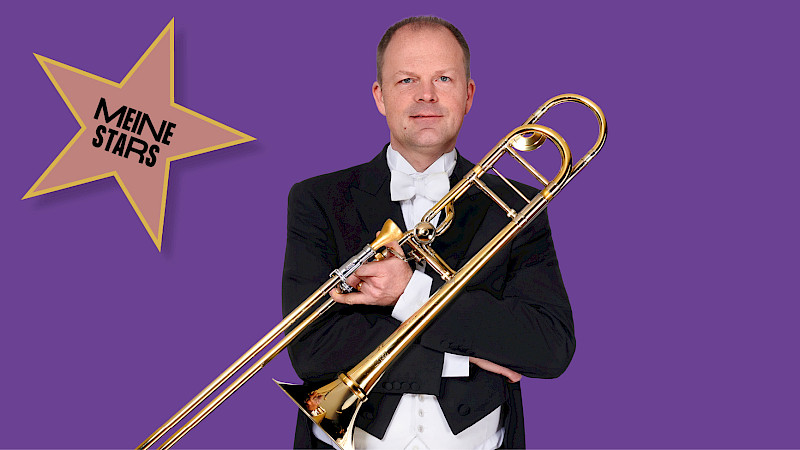
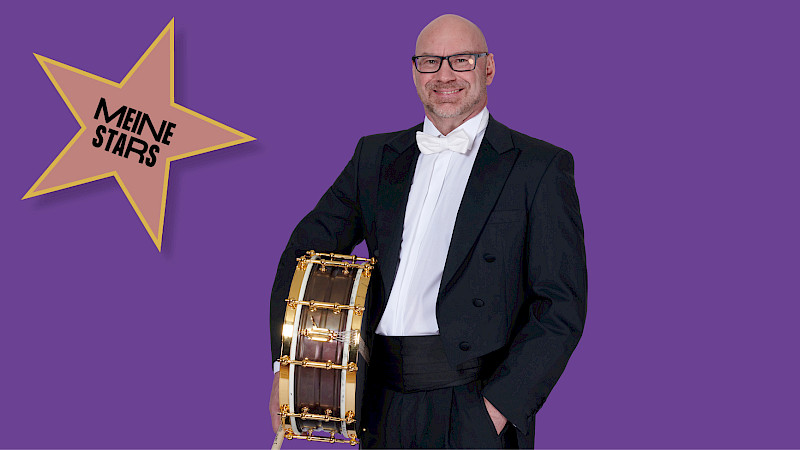
Seth Quistad, solo trombone
"When I was growing up, there was no YouTube; you bought a CD and that was it. For example, I had the one with the Brahms symphonies of the Chicago Symphony Orchestra under Sir Georg Solti: that was my reference - until I played these works in Zurich under the direction of David Zinman. Even though I still like Solti's interpretation, it seems a bit old-fashioned to me now. It's different with trumpeter Wynton Marsalis, he's central to us brass players, and he remains relevant, both in classical music and in jazz. I have experienced several concerts with him and I am still fascinated by the fact that there seems to be no boundary between him and his instrument. The music just flows ...
I also have to mention my studies when we talk about role models. My teacher had advised me to decide which trombone group I liked to listen to on the basis of CDs. That's how I ended up in Montreal, where there really was an incredible group: they were friends, but not best friends; everything was very respectful and collegial. They played great on stage, and there was never a bad word behind them.
Apart from the music, the American author Joseph Campbell comes to mind. He wrote a lot about mythology, he also interpreted Buddhism and Christianity mythologically. It was always about what you can learn from these myths about the good way to live.
One sentence in particular has stayed with me: 'You have to be prepared to give up the life you have planned for the life that is waiting for you I kept this in mind when I applied for a job in Zurich: I saw this advert but had no idea about the Tonhalle Orchestra - as I said, it was the time before the internet. But there was the name David Zinman, who was very well known in America; my father, who was a music teacher, also admired him. I really wanted to play under him. And I wasn't disappointed!"
—
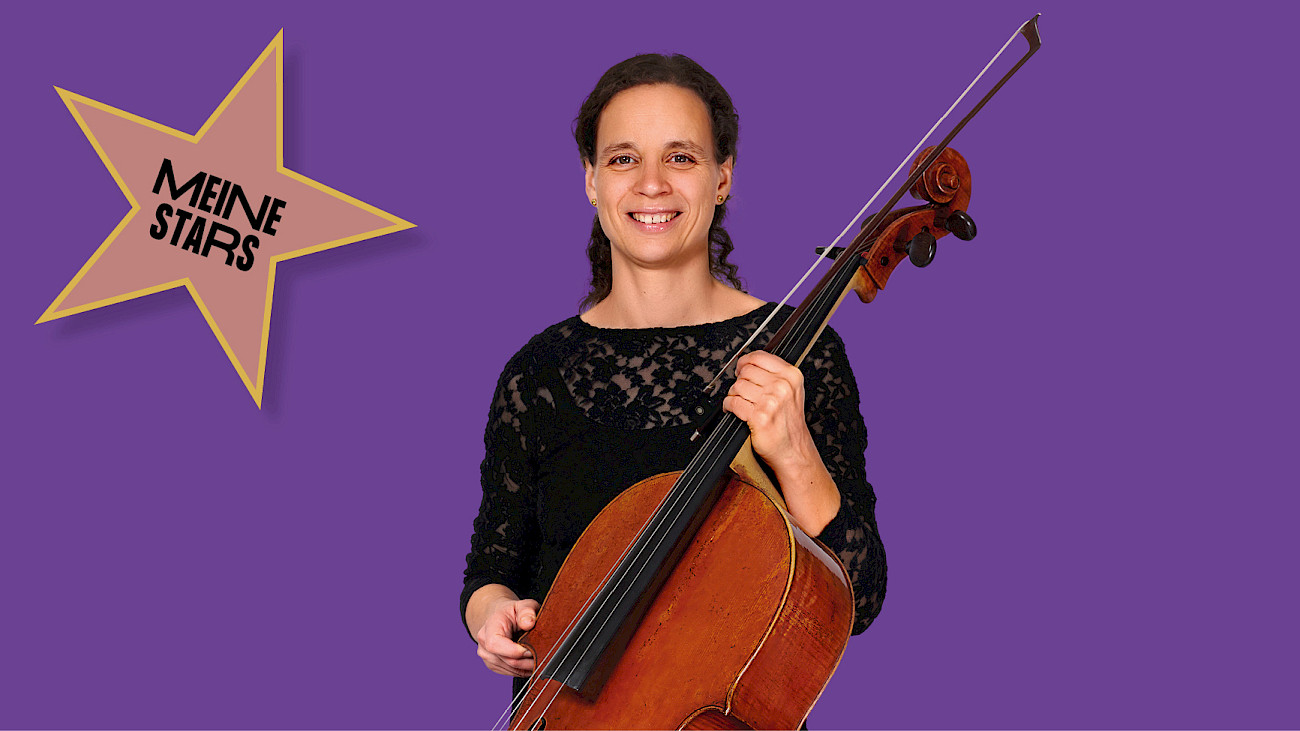
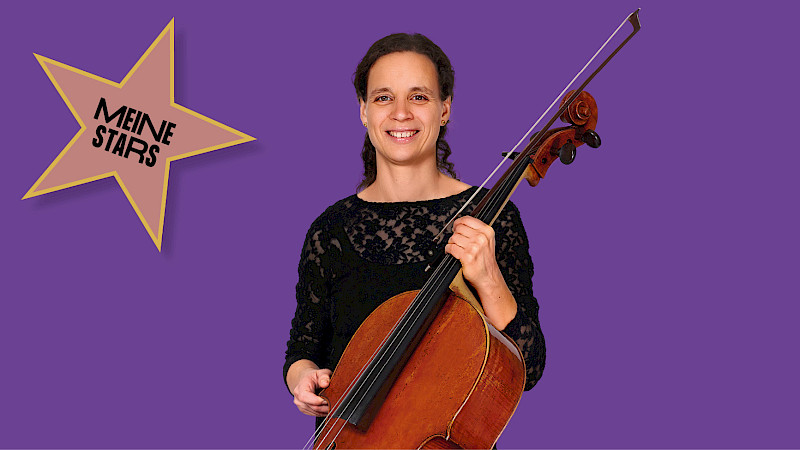
Anita Leuzinger, solo violoncello
"Four musicians in particular have influenced me, three of whom have become close friends. For me, musical and human qualities belong together; if a good performer behaves problematically, I immediately distance myself.
The first of these musicians is Thomas Grossenbacher, the former principal cellist of the Tonhalle Orchestra Zurich. He was my teacher when I was at grammar school and later we played in the orchestra together; he's a super nice person. I then studied with Thomas Demenga, who is also a role model in every respect - musically, personally and pedagogically. The third person I would like to mention is the pianist Ferenc Rados, who recently passed away; I often took lessons with him together with my piano partner. He never minced his words and he showed me a new approach to music.
Finally, the fourth name is that of Heinz Holliger. I got to know him when he was conducting the orchestra and we have often worked together since then. in 2008, for example, we rehearsed a piece by him in public in Ernen, which was incidentally an idea of Thomas Demenga; the audience was able to experience the development of the interpretation and thus gained a completely different relationship to this work. Holliger is a universal musician as a composer, conductor and oboist. And like Rados, he is a polymath, you can ask him anything: not just about music, but also about politics, history and art history.
I'm generally fascinated when people put their whole soul into something. In addition to these musicians, the midwife who accompanied me during the births of my two children comes to mind: she gave me so much confidence. That made a deep impression on me."
—
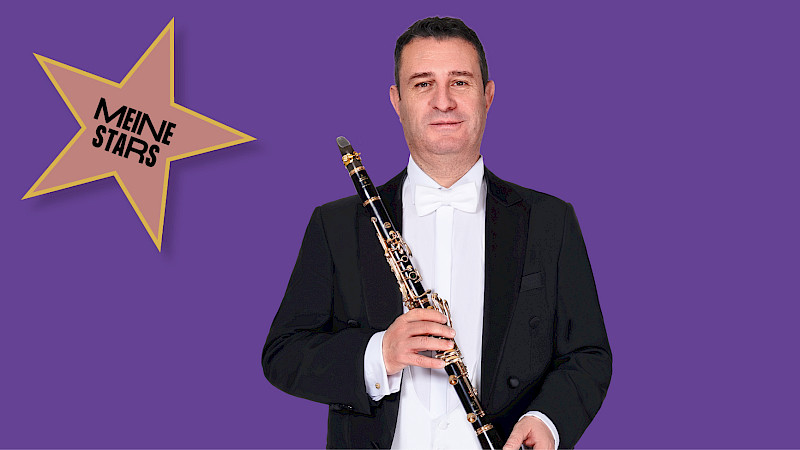
Calogero Palermo, solo clarinet
"As a musician, I was inspired by two idols in particular - a musician and a sportsman. The first was called Eliodoro Sollima and was my composition teacher in Palermo. He was the father of the composer Giovanni Sollima, whose works we occasionally perform. I practically lived in this family for five years, I was taken in like a nephew.
We spent hours discussing music, Eliodoro Sollima always said: "Even if you never want to write your own piece, it is important that you study composition. It's not enough to play beautifully, you have to understand the scores.
The best time came when I had my driving licence. He couldn't drive himself, so I always accompanied him to the concerts. He explained the works to me on the way there and we analysed the performance on the way home.
Once there was a summer party on the Sollimas' estate, we had organised a small volleyball tournament, but he brought me into the house because a concert with Claudio Abbado was being broadcast on television. I didn't understand what Abbado was doing at all, and Sollima was delighted at my confusion. "Bravo," he said, "that's exactly the point. He doesn't beat time, he phrases, he makes music." My sporting role model is the motorbike rider Valentino Rossi. He always seemed pretty crazy, but he prepared his races meticulously - in a way that can be compared to preparing for a concert. Just as he studied the track, I study the score. Where are the bends, where is it straight ahead? How should I regulate the speed or, in my case, the volume? A motorcyclist chooses the tyres depending on the conditions, I have to think about which reed to put in the clarinet. And while Rossi had to adjust to rain, wind or too much sun, the acoustics are always different for us on tour.
Unfortunately, I've never seen a race live. I once had a ticket for a test run - but the weather was too bad and it was cancelled."